
Rodent Entry Detection
Smoke Testing Reveals Rodent Entry Points—Fast!
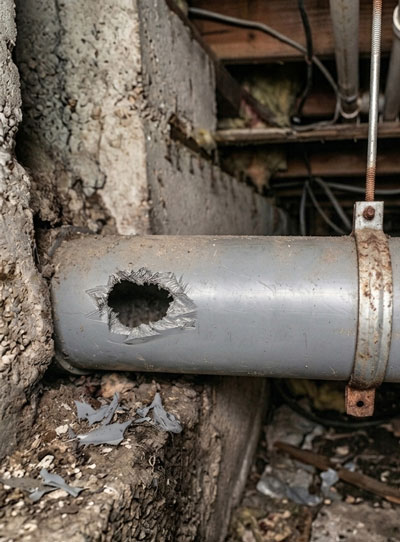
Smoke testing exposes chewed plumbing and sewer entry points that visual inspections miss—making it one of the most effective ways to identify hidden rodent access points.
The Hard Truth About Rodent Entry Points
Rodents don’t just enter buildings through obvious exterior openings—they frequently exploit plumbing systems to gain access. Chewed drain lines, missing cleanout caps, sewer lateral defects, and improper plumbing connections can all create hidden entry points that allow rats and mice to move freely into a structure. These defects are often concealed or underground, making them impossible to identify through visual inspection alone. As a result, infestations persist and callbacks increase—not because the treatment failed, but because the true access point was never located.
Why Smoke Testing Is So Effective for Rodent Detection
Why Smoke Testing is an Effective Solution
Smoke testing works because it doesn’t rely on guesswork—it follows the same paths rodents use. By introducing highly visible smoke into the plumbing system, hidden defects become impossible to ignore. Wherever rats or mice have chewed or compromised the pipe, smoke escapes - giving you clear visual confirmation of the breach. No tearing into walls, no assumptions - it’s a straightforward, field-proven way to expose concealed access points that visual inspections routinely miss. Plumbers and municipalities have relied on smoke testing to find plumbing defects for decades—and pest control professionals who adopt it gain a serious edge in rodent intrusion detection.
How Does Smoke Testing Work?
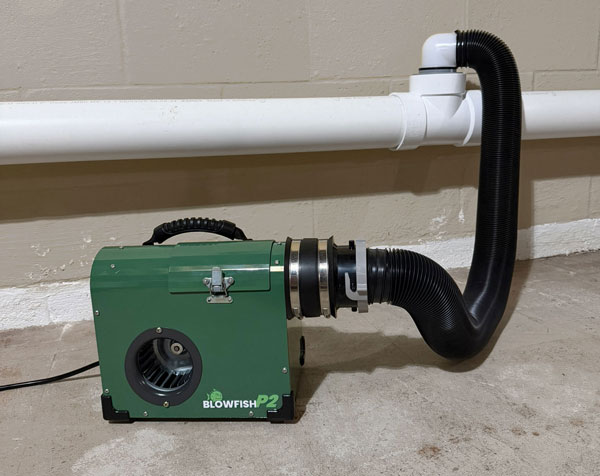
Smoke testing works by introducing airflow and visible smoke into a building’s plumbing system. This is done using a purpose-built plumbing smoke blower that attaches to a cleanout or other suitable access point. The blower delivers an appropriate smoke and calibrated airflow to achieve a good test without disturbing plumbing traps or other system components. Plumbing systems are designed to be airtight except at vents and approved outlets. As smoke moves through the system, it escapes through defects—making hidden entry points immediately visible.
What This MeansFor Your Business
Pinpoint rodent entry points with certainty
Eliminate guesswork by visually confirming exactly where rodents are entering the plumbing system—no assumptions.
Differentiate your services from competitors
Offer a diagnostic capability most pest control companies don’t have, positioning yourself as a higher-level problem solver.
Support exclusion recommendations with visual proof
Many plumbing faults never leak water or fail a pressure test. By visualizing airflow, smoke testing reveals air leaks that cameras and water-based methods can’t detect.
Increase job value with advanced diagnostics
Transform a basic service call into a comprehensive inspection that justifies premium pricing.
Reduce callbacks and repeat infestations
Smoke testing lets pest management professionals diagnose problems faster, and present undeniable proof to customers. That leads to faster approvals, fewer headaches, and more work completed—putting more money in your pocket without adding hours to your day.
Add a high value, billable service to your offerings
Introduce a specialized diagnostic that commands its own line item—creating new revenue without adding significant time or overhead.
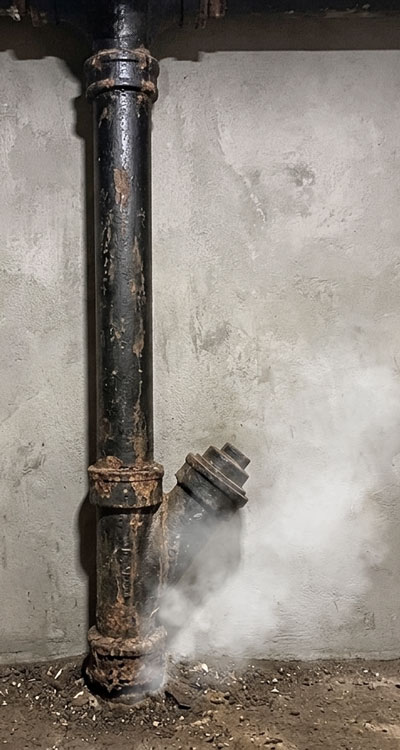
Rodent Smoke Testing Procedure
Smoke testing for rodent entry-point detection is simple in principle, but proper execution determines the result. Correct blower setup, smoke formulation, and a clear understanding of the process are what separate a clean, controlled test from a smokey mess.
Blowfish supports the process with step-by-step guidance, training content, real-world example videos, and equipment designed specifically for professional use. The result is a reliable, repeatable way to uncover hidden entry points and validate exclusion recommendations with confidence. Ready to see how it works? Explore the resources below:
Gear Selection Matters
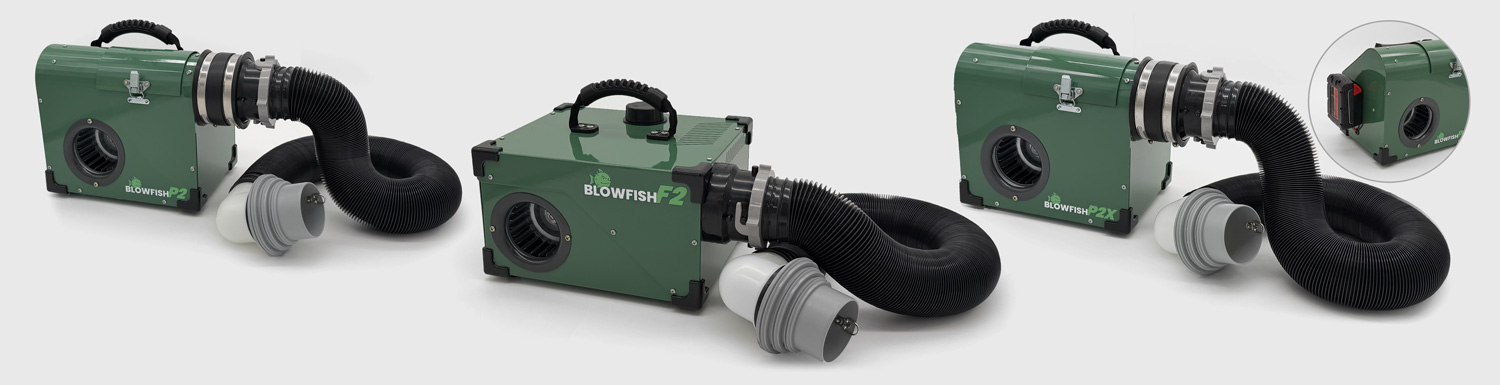
Effective smoke testing for rodent detection depends on using equipment designed to work inside real buildings—not improvised tools or DIY techniques. The smoke must be appropriate for plumbing systems, and airflow must be controlled so defects are revealed without filling interiors with smoke and creating unsafe conditions. When the equipment isn’t right, results are unreliable and the process quickly becomes a liability instead of an asset.
Introducing Blowfish
Blowfish Smoke Blowers are purpose-built for controlled, professional smoke testing, even in finished spaces, making them ideal for pest control applications. Designed and built in the USA, Blowfish blowers deliver clean, predictable smoke output that helps pest control professionals locate hidden access points with confidence and present clear, defensible findings to customers.
Ready to Add Smoke Testing to Your Pest Control Business?
Explore our rodent detection smoke solutions to see how seamlessly smoke testing can fit into your service model—and turn hidden access points into documented findings and measurable revenue growth.
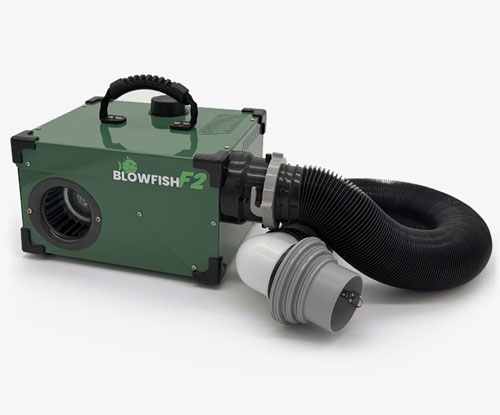
Smoke Blowers

Smoke Pellets
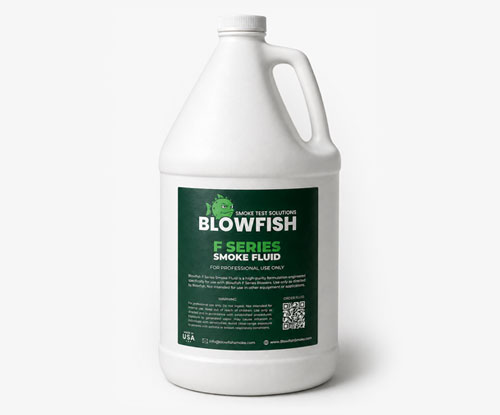
Smoke Fluid

